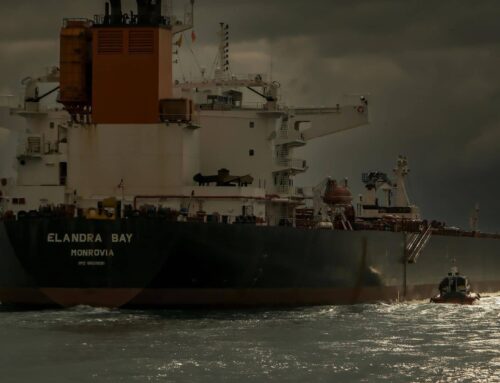
In today’s logistics environment, delivery alone is no longer the benchmark of success. What matters is the condition in which a shipment arrives — and whether that condition can be verified with certainty. Across industries handling sensitive, high-value, or precision equipment, a growing challenge is emerging: products may arrive on time, appear intact, and yet still carry hidden damage caused during transit. In many cases, that damage is only discovered later — during installation, operation, or even after deployment. This shift has led to a new requirement in supply chains: the ability to monitor, record, and validate shipment conditions throughout the entire journey.
From “Delivered” to “Delivered in Condition”
Traditional logistics models focused on milestones — dispatch, transit, delivery. Today, those checkpoints are no longer sufficient.
Companies now need to answer critical questions such as:
- Was the shipment exposed to excessive shock?
- Were environmental conditions maintained within acceptable limits?
- At what point in transit did a deviation occur?
For sectors such as healthcare, laboratory equipment, industrial manufacturing, and precision engineering, these questions are directly linked to operational risk. A single undetected impact or temperature fluctuation can compromise performance, reduce lifespan, or invalidate compliance requirements.
As a result, condition validation is becoming a core KPI, not just an added layer of control.
Why Single-Metric Monitoring Falls Short
Historically, monitoring tools have been used in isolation:
- Shock indicators signal if a predefined impact threshold has been exceeded.
- Temperature loggers track environmental conditions during transit.
- While useful, these tools provide only partial visibility.
A shock indicator may confirm that an impact occurred — but not when, how often, or under what conditions.A temperature logger may show fluctuations — but without context regarding handling events that could have contributed to those changes. This fragmented view limits the ability to fully understand what happened during transit.
The Value of Combined Monitoring
Modern shipment monitoring is moving toward multi-parameter data capture, where both physical impact and environmental conditions are recorded together. This combined approach enables:
- Event correlation
Enables shipment condition monitoring systems to correlate physical impact events with temperature fluctuations during transit. - Timeline visibility
Provides precise time-stamped visibility of transport conditions, allowing identification of when damage or deviation occurred. - Objective verification
Supports transport validation and compliance reporting using recorded multi-sensor data from impact and temperature monitoring. - Process improvement
Improves shipment condition monitoring processes by using historical transport data to refine packaging, handling, and logistics methods.
In practice, this transforms monitoring from a passive control mechanism into a decision-making tool.
Passive vs Real-Time Monitoring
Another important distinction lies in how data is accessed.
Passive Monitoring
- Data is stored and retrieved after delivery.
- Suitable for audits, validation, and post-event analysis.
Connected / Real-Time Monitoring
- Data is transmitted during transit.
- Enables immediate response to critical events.
- Provides greater control over high-risk shipments.
The choice between these approaches depends on the level of criticality, shipment value, and operational requirements. However, the trend is clear: greater visibility leads to faster decisions and reduced risk exposure.
Who Requires This Level of Control
The need for combined monitoring is most evident in sectors where failure carries significant consequences:
- Healthcare and laboratory logistics.
- Pharmaceutical and biotech supply chains.
- Precision instruments and optical equipment.
- Industrial machinery and robotics.
- High-value or mission-critical shipments.
In these environments, logistics is not just about transportation — it is an extension of quality assurance.
From Cost Control to Operational Advantage
Monitoring technologies have traditionally been viewed as an added cost. This perception is changing. Organizations are now recognizing that structured shipment data can:
- Reduce warranty and replacement costs.
- Strengthen claims and liability management.
- Improve supplier and carrier accountability.
- Enhance internal quality processes.
- Support long-term operational optimization.
Rather than reacting to damage, companies can begin to prevent it, document it, and learn from it.
What Defines a Modern Monitoring Solution
As requirements evolve, so do expectations from monitoring devices. Key capabilities now include:
- Multi-parameter tracking (impact, temperature, and more where applicable).
- Configurable thresholds aligned with product sensitivity.
- Accurate data logging with timestamps.
- Reliable battery performance for long shipments.
- Ease of data extraction and analysis.
- Durability across different transport environments.
The goal is not simply to detect issues, but to provide clear, actionable insight.
Conclusion: Moving Toward Verified Logistics
As supply chains become more complex and product sensitivity increases, assumptions are no longer acceptable. Verification is becoming essential.
Companies that integrate monitoring technologies into their logistics processes gain more than visibility — they gain control. They are better equipped to protect their products, validate their operations, and continuously improve their supply chain performance.
In an environment where reliability defines competitiveness, the ability to understand exactly what happens during transit is no longer optional. It is a necessary step toward building more resilient and accountable logistics systems.