In modern logistics operations, knowing where a shipment is located is no longer enough. Organizations increasingly need visibility into the conditions products experience throughout transportation, particularly when dealing with high-value assets, temperature-sensitive goods, and critical equipment.
A shipment can arrive on time and appear undamaged while still having been exposed to excessive impacts, temperature excursions, improper storage conditions, or handling events that may compromise product quality and performance.
To address these risks, many organizations use impact and temperature recorders as part of their transportation monitoring strategy.
What Is an Impact and Temperature Recorder?
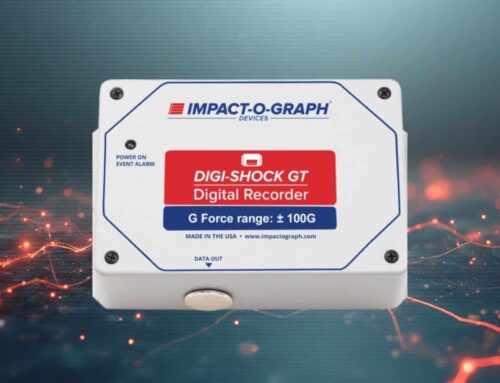
An impact and temperature recorder is a monitoring device designed to track both shock events and temperature conditions throughout a shipment’s journey.
Unlike standard shipment tracking systems that only provide location updates, these devices record environmental and handling conditions that may affect product integrity.
Depending on the device, recorded data may include:
- Impact magnitude (G-force)
- Date and time of events
- Temperature readings
- Temperature excursions
- Multiple impact events
- Orientation data
- Historical condition records
Most impact and temperature recorders function as specialized data loggers, continuously collecting and storing environmental and handling data throughout transportation. Depending on the device design, monitoring may be performed using sensors such as temperature probes and 3-axis accelerometers capable of measuring shock events across multiple directions.
This information helps organizations gain a more complete understanding of what occurred during transportation.
Why Location Tracking Alone Is Not Enough
Modern tracking systems can accurately show where a shipment is located, but they cannot explain what happened to it along the way.
For example, a shipment may:
- Remain on an airport tarmac during extreme heat
- Experience multiple handling impacts during loading
- Be stored temporarily in unsuitable environmental conditions
- Encounter delays that expose products to temperatures outside acceptable ranges
Without environmental monitoring, these events often remain invisible until product issues are discovered later.
For organizations seeking greater supply chain visibility, understanding shipment conditions is just as important as knowing shipment location.
Understanding Temperature Excursions
A temperature excursion occurs when a product is exposed to temperatures outside its acceptable range for a period of time.
Even relatively short excursions can affect:
- Pharmaceutical products
- Vaccines
- Biological materials
- Food products
- Chemical substances
- Sensitive electronics
In some cases, damage may not be immediately visible, making temperature monitoring essential for quality assurance and risk management.
Why Monitoring Impacts Matters
While temperature conditions receive significant attention, physical handling events can be equally important.
Many modern monitoring devices use a 3-axis accelerometer to measure acceleration forces across the X, Y, and Z axes. This allows organizations to understand not only the magnitude of an impact event but also the direction from which the force occurred.
The recorded data is typically expressed in G-force values, allowing organizations to quantify the severity of impact events.
Drops, shocks, and excessive impacts may damage products, packaging, or internal components without creating obvious external signs.
Monitoring impacts helps organizations determine:
- Whether a significant shock event occurred
- The severity of the event
- When it happened
- Whether inspection may be necessary
This information can be particularly valuable for high-value equipment and sensitive assets.
Industries That Commonly Use Impact and Temperature Recorders
- Pharmaceuticals and Healthcare
Many pharmaceutical products require strict temperature control throughout transportation and storage.
In pharmaceutical and healthcare logistics, measurement accuracy is often a critical requirement. Some organizations require monitoring devices that support calibrated measurements and NIST-traceable calibration records to help verify temperature accuracy throughout transportation.
Traceable calibration records may be required as part of quality assurance processes, regulatory compliance programs, and transportation validation procedures.
Impact and temperature monitoring helps support product integrity and transportation compliance requirements.
- Medical Devices
Medical equipment often combines high value with strict handling requirements.
Detailed transportation data can help organizations identify events that may affect performance or calibration.
- Food and Cold Chain Logistics
Cold chain shipments rely on maintaining specific environmental conditions from origin to destination.
Monitoring devices provide visibility into both temperature compliance and handling conditions throughout the journey.
- Electronics and Laboratory Equipment
Sensitive instruments and electronic systems can be vulnerable to both environmental changes and physical impacts.
Transportation monitoring helps reduce uncertainty and improve damage investigations.
Industrial Machinery and High-Value Assets
Transformers, aerospace components, manufacturing equipment, and specialized machinery often travel through multiple transportation stages where monitoring data can provide valuable operational insights.
Supporting Root Cause Analysis
When transportation-related issues occur repeatedly, organizations often struggle to identify the underlying cause.
Impact and temperature recorders provide objective data that can support root cause analysis by helping teams identify:
- Recurring handling issues
- High-risk transportation routes
- Environmental exposure patterns
- Operational weaknesses
- Packaging deficiencies
These insights can support continuous improvement initiatives across the supply chain.
Packaging Validation and Performance Testing
Transportation monitoring data can also help organizations evaluate packaging effectiveness under real-world conditions.
By reviewing impact and temperature data, companies can determine whether packaging solutions provide adequate protection or whether improvements are needed.
This makes monitoring devices valuable tools for packaging validation programs.
Insurance, Claims, and Incident Investigations
When products arrive damaged or compromised, transportation data can help support investigations and claims processes.
Rather than relying solely on visual inspections, organizations can review objective shipment condition data to better understand what occurred during transit.
This can improve accountability and help reduce disputes between stakeholders.
When Is an Impact and Temperature Recorder Needed?
Organizations often consider using impact and temperature recorders when:
- Shipment value is high
- Products are temperature sensitive
- Transportation routes are complex
- Regulatory compliance is required
- Product quality is critical
- Detailed shipment visibility is needed
- Transportation risks carry significant operational consequences
The higher the potential cost of product damage, quality issues, or shipment failure, the greater the value of detailed transportation monitoring.
Combining Impact and Temperature Monitoring
Some transportation monitoring solutions combine impact and temperature tracking within a single device. This allows organizations to review both physical handling events and environmental conditions from a single data source.
Combining these measurements can simplify shipment investigations, improve visibility into transportation conditions, and support compliance and quality assurance requirements.
Benefits of Combining Impact and Temperature Monitoring
Monitoring both impact and temperature conditions provides a more complete view of transportation risks than monitoring either factor independently.
Key benefits include:
- Improved shipment visibility throughout transportation
- Faster investigations when incidents occur
- Better support for compliance and quality assurance requirements
- Reduced transportation risk through objective shipment condition data
- More effective packaging validation and performance assessment
Conclusion
Impact and temperature recorders provide organizations with visibility into transportation conditions that traditional tracking systems cannot offer. By combining temperature logging and impact monitoring within a single data logger, organizations gain greater visibility into shipment conditions and transportation risks.
As supply chains continue to become more complex, access to reliable shipment condition data is becoming increasingly important for organizations seeking to protect valuable assets and improve operational decision-making.