What It Reveals About Supply Chain Leadership, Efficiency, and Operational Resilience
Date: September 2026
Location: United States
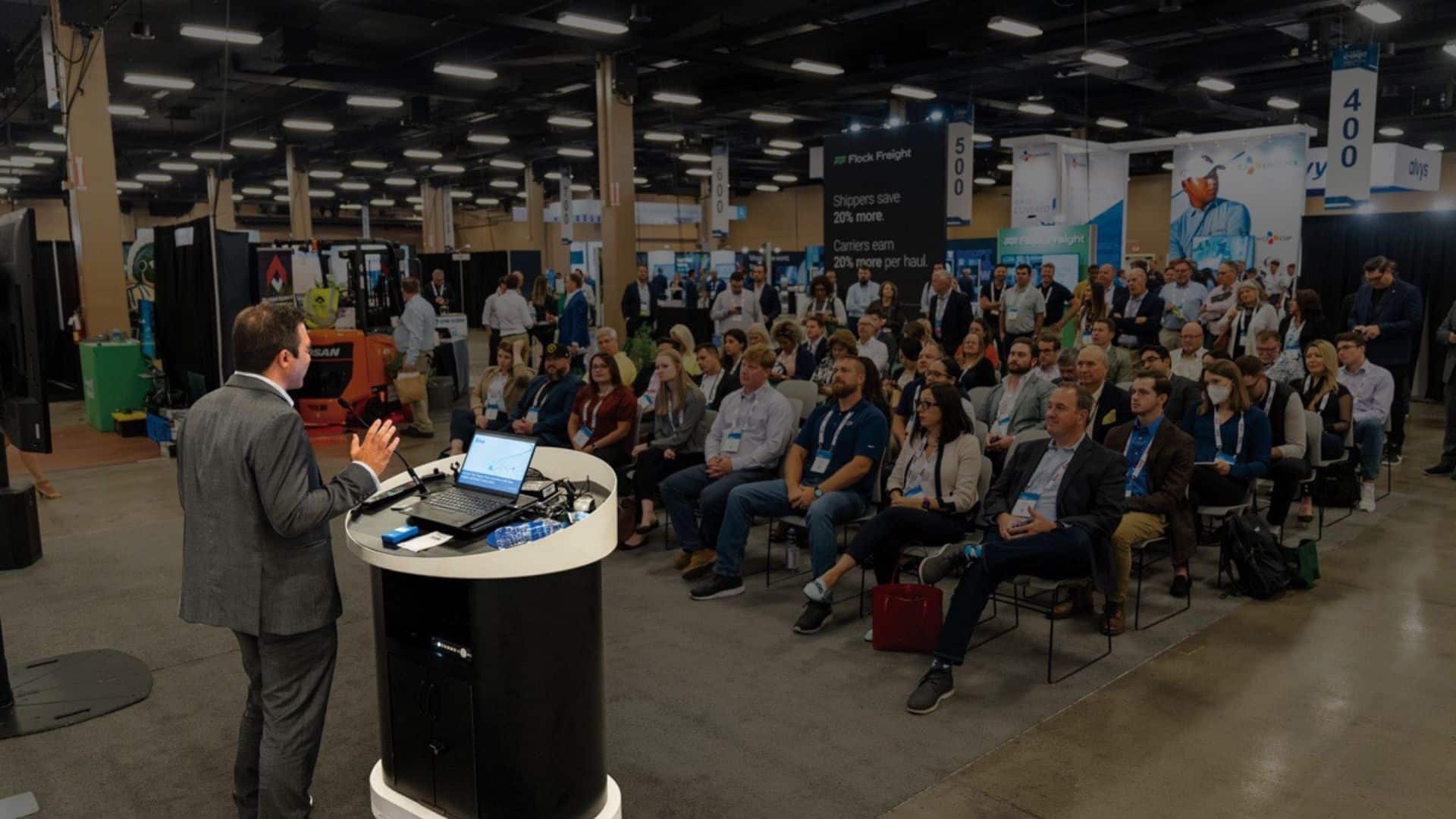
The CSCMP EDGE Conference 2026 is expected to gather senior supply chain leaders, logistics executives, and technology decision-makers from across global industries. Unlike large-scale exhibitions focused on product showcasing, EDGE operates at a strategic level, shaping how organizations approach supply chain management, technology adoption, and operational performance.
As supply chains continue to operate under pressure from cost volatility, infrastructure constraints, and increasing service expectations, the discussions at CSCMP EDGE provide a clear indication of how leadership priorities are evolving.
Leadership Focus Shifts Toward Execution Efficiency
One of the defining themes of recent CSCMP EDGE conferences — and expected to continue in 2026 — is the shift from expansion-driven strategies toward execution efficiency.
Organizations are no longer evaluating supply chains solely on their ability to scale or accelerate delivery. Instead, performance is increasingly measured based on consistency, predictability, and cost control across existing operations.
At the leadership level, this translates into a stronger focus on:
- Reducing operational variability across transport networks
- Improving planning accuracy and schedule reliability
- Aligning logistics performance with financial and contractual outcomes
- Ensuring that execution performance can be measured and verified
Technology adoption is therefore assessed based on its contribution to operational discipline rather than its novelty.
From Data Availability to Decision Quality
Another key area of discussion expected at CSCMP EDGE 2026 is the transition from data availability to decision quality.
Most large organizations already operate with extensive data environments, including ERP systems, transport management systems, and tracking platforms. However, the challenge is no longer access to data, but the ability to extract meaningful, actionable insights from it.
From a leadership perspective, the focus is shifting toward:
- Filtering operationally relevant data from large datasets
- Establishing clear thresholds for exception management
- Supporting faster, evidence-based decision-making
- Standardizing reporting across business units and geographies
In this context, data is evaluated based on its ability to support execution decisions, rather than simply providing visibility.
Operational Resilience as a Measurable Objective
Resilience continues to be a central topic in supply chain strategy, but its definition is becoming more concrete.
Rather than being treated as a broad concept, resilience is increasingly linked to specific operational capabilities, including:
- The ability to detect deviations during transport
- The capacity to respond to disruptions before delivery
- The availability of documented data to support corrective actions
- The reduction of uncertainty across complex logistics networks
This approach reflects a shift toward measurable resilience, where organizations seek to quantify risk exposure and demonstrate control over transport conditions.
Relevance for Industrial Logistics Decision-Makers
The CSCMP EDGE Conference attracts a senior audience, including:
- Vice Presidents of Supply Chain
- Logistics Directors
- Operations and Procurement leaders
- Technology and transformation executives
For these stakeholders, technology decisions are evaluated within a broader business context. Monitoring and visibility solutions are not assessed in isolation, but in terms of their contribution to:
- Operational efficiency
- Risk reduction
- Cost control
- Contractual compliance
- Cross-functional coordination
As a result, discussions at EDGE increasingly emphasize integration, scalability, and alignment with real-world operational workflows.
Implications for Technology Adoption in 2026
The strategic direction emerging from CSCMP EDGE 2026 reinforces several ongoing trends in supply chain technology adoption.
Organizations are prioritizing systems that:
- Provide clear, verifiable insight into execution performance
- Support consistent decision-making across multiple stakeholders
- Integrate with existing operational and reporting structures
- Reduce ambiguity in transport and handling processes
In this environment, technologies that capture and document physical conditions during transport — including impact, vibration, and handling exposure — align with broader objectives related to accountability and execution control.
Rather than being positioned as specialized tools, these systems are increasingly considered part of the core infrastructure required to support reliable logistics operations.
Strategic Direction Following CSCMP EDGE 2026
As supply chains continue to operate under tighter performance constraints, the direction outlined by CSCMP EDGE 2026 is expected to influence both strategic planning and operational execution.
The focus is moving toward:
- Controlled, predictable transport processes
- Measurable performance indicators
- Data that supports decisions, not just reporting
- Technologies that integrate into existing workflows without adding complexity
For organizations managing high-value or high-risk shipments, these priorities translate into a more structured approach to monitoring, documentation, and transport validation.
CSCMP EDGE does not introduce isolated trends. It reflects how leading organizations are aligning supply chain strategy with operational reality, emphasizing execution quality over expansion and clarity over volume of information.