Let’s be real: Nobody in 2026 has time to stare at a screen full of wobbling line graphs and flashing red dots. We call it “Dashboard Fatigue”, and it’s the silent killer of supply chain efficiency.
In the old days (like, three years ago), an impact recorder would “chirp” an alert, and a human manager would have to log in, look at a G-force spike, call the carrier, argue with a site lead, and eventually—maybe—order an inspection. That’s not a strategy; that’s a hobby.
Enter: Agentic AI & The Automated Response
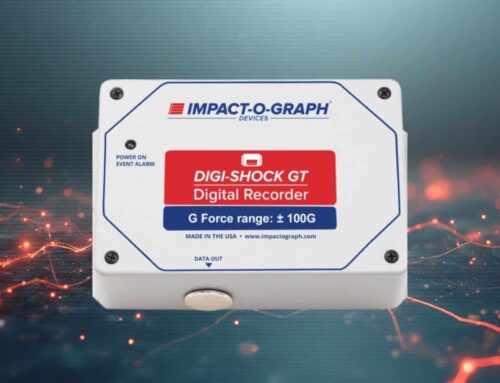
In 2026, the game has changed. We’ve moved from Reactive Monitoring to Autonomous Orchestration. Today’s leading EPCs and logistics giants are using Agentic AI—AI “agents” that don’t just show you data, but actually act on it. When an Impact-O-Graph device detects a 15G multi-axis shock on a $5M transformer, the “Agent” doesn’t just send an email. It’s already three steps ahead:
- Instant Structural Triage: The AI pulls the high-fidelity G-force and tilt data from the IOG sensor and cross-references it with the asset’s “Digital Twin” to see if internal coil displacement is statistically likely.
- Autonomous Re-Routing: If the math says “damage probable,” the AI automatically pings the freight forwarder to re-route the shipment to a certified repair hub instead of the final job site—saving weeks of wasted transport.
- Financial Lockdown: It triggers an immediate “Hold” on the vendor payment and initiates an insurance claim file with all the telemetry data attached as a “smoking gun” evidence package.
The IOG Angle: The “Eyes on the Ground” for the AI
Here’s the thing about AI: It’s only as smart as the data you feed it (Garbage In, Garbage Out). If your sensor provides “fuzzy” data or misses a high-frequency vibration event, your AI agent is flying blind.
Impact-O-Graph devices are the hard-wired truth in this ecosystem. We provide the “Decision-Ready Data”—the high-fidelity, timestamped, and unhackable telemetry that gives the AI the “confidence” to make a $100,000 logistics pivot.
Why it matters for your bottom line:
- Zero Latency: You aren’t waiting for a Monday morning meeting to realize a generator was dropped on a Friday night.
- Eliminating Human Error: No more “interpreting” graphs. The system knows the threshold, sees the breach, and executes the protocol.
- Reduced Inspection Costs: You only send an expert team to the field when the IOG data confirms a “critical event,” rather than inspecting every unit “just in case.”
In 2026, if your data isn’t decision-ready, it’s just noise. Impact-O-Graph turns that noise into a tactical advantage.