As global supply chains continue to navigate geopolitical volatility, cost pressures, and infrastructure constraints, recent industry analyses indicate that 2026 will not be defined by disruptive experimentation — but by the accelerated adoption of focused, operational technologies.
Rather than broad digital transformation initiatives, companies are prioritizing narrow, high-impact systems that improve visibility, predictability, and execution stability across transport networks.
From Innovation Hype to Execution Precision
Recent industry research indicates a decisive shift in supply chain technology strategy. After several years characterized by large-scale digital transformation narratives and experimental platform investments, supply chain leaders are recalibrating priorities.
Instead of broad, speculative deployments, organizations are now concentrating on focused technologies that deliver measurable operational impact.
The emphasis has moved toward:
- Real-time data capture
The ability to collect accurate, time-stamped information directly from physical assets during transport is becoming foundational. Rather than relying solely on ERP updates or milestone-based tracking, companies are implementing systems that record events at the moment they occur — whether during loading, handling, rail transit, or maritime shipment. Real-time capture reduces ambiguity and shortens the gap between incident occurrence and response. - Edge-based sensing
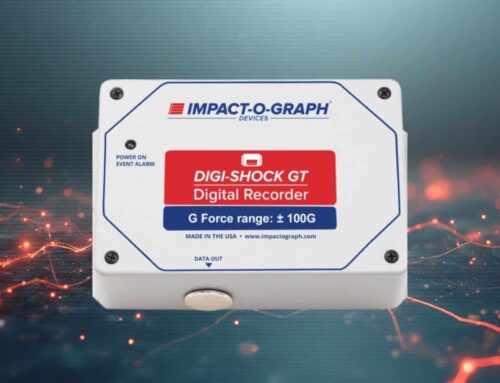
Data collection is increasingly moving closer to the cargo itself. Edge devices — including embedded sensors and standalone monitoring units — operate independently of centralized systems, recording shock, vibration, tilt, or environmental conditions directly at the source of risk. This minimizes dependency on network connectivity and ensures that critical transport data is preserved even in remote or multi-modal logistics environments. - Actionable operational intelligence
Organizations are no longer satisfied with raw data streams. The requirement now is structured intelligence — event thresholds, severity scoring, exception alerts, and standardized reporting formats. Decision-makers expect systems that translate physical measurements into operational conclusions: Was the cargo handled within tolerance limits? Does the event warrant inspection? Is there exposure that could affect warranty or performance? - System interoperability
Technology investments must integrate into existing supply chain ecosystems. Monitoring solutions are increasingly evaluated based on their compatibility with ERP systems, freight management platforms, insurance workflows, and compliance documentation processes. Interoperability reduces friction, prevents data silos, and strengthens cross-functional visibility between logistics, engineering, procurement, and compliance teams. - Risk-mitigation technologies
Above all, investment priorities are now directly linked to measurable risk reduction. Whether through impact recording, vibration monitoring, or condition validation, technologies must demonstrate their ability to reduce financial exposure, strengthen accountability, and improve shipment predictability.
This evolution reflects a broader industry consensus: resilience is built through clarity, not complexity. Supply chain leaders are recognizing that layered platforms and abstract analytics cannot compensate for missing visibility at the physical level of transport.
As a result, organizations are increasingly seeking technologies that provide precise answers to operationally critical questions, including:
- What happened during transit?
Not just location updates, but documented physical events — shock incidents, excessive tilt, sustained vibration exposure, or abnormal handling. - Where did deviation occur?
Identifying whether risk materialized during loading, rail transfer, port handling, or final delivery is essential for accountability and process improvement. - Was cargo exposed to abnormal conditions?
Quantifying deviation against defined tolerance thresholds enables objective inspection decisions and prevents unnecessary disassembly or delays. - Can risk be documented and verified?
Structured event records support warranty validation, insurance claims, compliance reporting, and internal performance auditing.
The strategic shift for 2026 is therefore not about adopting more technology — but about deploying the right technologies at the right operational layer.

Real-Time Data Becomes Foundational
One of the most consistent findings in 2026 supply chain trend analysis is the growing demand for real-time and near-real-time data acquisition directly at the physical asset level.
This shift is not technology-driven — it is requirement-driven.
Procurement teams, logistics managers, and engineering departments are increasingly requesting monitoring systems that provide condition data during transit rather than after delivery. The expectation is immediate visibility into transport exposure, not post-shipment reconstruction.
Core components of this transition include:
- Equipment-level sensors
Monitoring is moving from centralized tracking systems to asset-level devices attached directly to cargo. These sensors measure shock, tilt, vibration, and environmental exposure during transport. The demand stems from the need to eliminate uncertainty around handling quality, particularly for high-value or structurally sensitive equipment. - Edge data processing
Clients are requesting systems that process and store data locally at the device level. This reduces dependency on continuous connectivity and ensures that data integrity is maintained across long-haul, maritime, or remote routes. For many industrial shipments, uninterrupted network coverage cannot be guaranteed. Edge capability addresses that operational reality. - Embedded monitoring systems
Increasingly, monitoring is integrated into packaging strategies or transport preparation protocols rather than added as an afterthought. Buyers are incorporating monitoring into standard operating procedures for critical shipments. This reflects a shift from reactive inspection to preventive documentation. - Automated event alerts
Where connectivity allows, automated notifications for threshold exceedance are becoming a requirement. Logistics teams want to know if abnormal shock or tilt occurs during transit so they can plan inspection, intervention, or documentation before final installation or commissioning.
From the client perspective, the objective has shifted. The priority is no longer retrospective analysis conducted days or weeks after delivery. Instead, organizations seek situational awareness during transport to:
- Anticipate potential installation delays.
- Pre-arrange inspections.
- Notify insurance providers proactively.
- Protect commissioning schedules.
- Maintain contractual compliance.
This demand is driven by operational pressures:
- Increasing freight volumes.
- More complex multi-modal routes.
- Higher cargo values.
- Tighter delivery timelines.
- Stricter warranty and performance obligations.
Under these conditions, visibility into cargo condition is no longer considered an added-value feature.
It is becoming a baseline requirement in sectors such as energy infrastructure, rail equipment, industrial manufacturing, and heavy machinery transport. From a procurement standpoint, monitoring capability is increasingly evaluated as part of shipment risk planning — not as an optional technology enhancement.
Real-time condition awareness reduces uncertainty, improves planning accuracy, and strengthens accountability across the supply chain. In 2026, the market signal is clear: physical visibility at the asset level is moving from competitive differentiator to operational standard.
Actionable Insights Over Raw Data
As real-time monitoring becomes more widely adopted, another parallel shift is emerging across supply chain operations: the growing demand for structured, decision-ready outputs rather than unfiltered data streams.
Organizations that deploy asset-level monitoring systems quickly recognize that data volume alone does not improve operational performance. What creates value is the ability to interpret recorded events in a consistent, standardized, and operationally meaningful way.
From a client perspective, this requirement is driven by practical constraints. Logistics teams operate under time pressure. Engineering departments require clear validation criteria. Insurance and compliance stakeholders expect documented evidence. In this environment, raw acceleration graphs or vibration datasets are not sufficient on their own.
Instead, buyers increasingly request monitoring systems that deliver:
- Defined threshold-based event logging aligned with cargo tolerance limits.
- Severity classification that differentiates minor handling events from critical shock incidents.
- Structured reports suitable for documentation and audit purposes.
- Clear indicators of whether inspection is recommended or not.
The objective is to reduce interpretation ambiguity. When a shipment arrives, decision-makers should not need to reconstruct event significance manually. They should be able to determine, within a defined framework, whether the recorded transport exposure falls within acceptable operational parameters.
This shift also reflects increased contractual and financial accountability. High-value infrastructure components, industrial equipment, and energy assets are often governed by performance guarantees, installation schedules, and insurance conditions. In such cases, condition data must be usable not only for internal review but also for external verification.
Clients therefore evaluate monitoring technologies based on their ability to support:
- Warranty protection and validation.
- Insurance claim substantiation.
- Supplier performance assessment.
- Process improvement analysis.
- Regulatory documentation requirements.
Another important factor is standardization. As monitoring becomes integrated into recurring shipment protocols, organizations require consistent data formats that can be archived, compared across shipments, and reviewed during audits. This creates a preference for systems that produce structured outputs rather than ad hoc datasets.
In this context, the value proposition of condition monitoring extends beyond event detection. It becomes part of a broader operational intelligence framework in which transport data supports planning accuracy, financial protection, and long-term performance optimization.
As supply chains grow more complex and asset values increase, the distinction between collecting data and generating operational insight becomes increasingly significant. The market trend for 2026 indicates that buyers are no longer satisfied with visibility alone; they require clarity that translates into concrete, defensible decisions.
Stability as a Competitive Advantage
Building on the shift toward real-time visibility and structured decision-making, one of the clearest conclusions emerging from 2026 supply chain forecasts is the prioritization of operational stability over rapid expansion.
In previous years, many organizations focused on scaling distribution networks, accelerating delivery times, and increasing route complexity to meet growth objectives. Today, the emphasis has shifted toward controlling variability within existing operations. The objective is not simply to move more goods, but to move them with greater predictability and lower risk exposure.
This strategic recalibration is reflected in technology investment decisions. Companies are allocating resources to systems that contribute directly to execution reliability rather than speculative innovation.
Specifically, organizations are prioritizing technologies that:
- Reduce shipment uncertainty
Transport uncertainty creates cascading operational effects. When cargo condition cannot be verified during transit, receiving facilities must prepare for contingencies, inspection schedules become unpredictable, and installation timelines are exposed to delay. Monitoring technologies reduce uncertainty by providing documented evidence of handling conditions, enabling more accurate downstream planning. - Improve accountability across the logistics chain
Multi-modal transport environments involve multiple parties: freight forwarders, port operators, rail carriers, trucking providers, and handling crews. Without condition data, determining responsibility for damage becomes subjective and time-consuming. Systems that record physical exposure introduce measurable accountability, which can improve performance discipline across service providers. - Strengthen claim validation and dispute resolution
Insurance claims and supplier disputes are increasingly documentation-driven. Quantified impact, tilt, and vibration records support objective assessment of whether transport conditions exceeded agreed thresholds. This reduces ambiguity and shortens resolution cycles, limiting financial and administrative exposure. - Support compliance and contractual documentation
Infrastructure projects, industrial equipment deployments, and regulated shipments often require traceable condition records. Monitoring data can serve as part of compliance documentation packages, supporting contractual obligations and internal audit requirements. - Minimize operational disruption from unforeseen handling events
When abnormal exposure is detected early, organizations can prepare mitigation strategies in advance of delivery. This may include scheduling inspections, notifying engineering teams, or coordinating with insurance providers. Early awareness reduces the likelihood of unexpected installation delays or commissioning setbacks.
Within this framework, monitoring technologies that record physical impact, vibration, and tilt are increasingly aligned with strategic transport planning rather than treated as optional add-ons. Their role extends beyond detecting damage; they provide measurable transparency that supports stability across procurement, logistics, engineering, and compliance functions.
As supply chains become more interconnected and performance expectations tighten, operational stability is emerging as a competitive differentiator. Companies that can demonstrate controlled execution and documented transport conditions are better positioned to manage financial risk, maintain project timelines, and strengthen stakeholder confidence.
The 2026 outlook suggests that investment decisions will continue to favor technologies that reduce variability and provide defensible evidence of transport performance. In that environment, asset-level condition monitoring integrates naturally into broader risk management and operational governance strategies.
A Measured Monitoring Technology Evolution
The supply chain technology outlook for 2026 does not point toward radical disruption, but toward disciplined execution. Organizations are refining their technology stacks to support visibility at the physical asset level, structured interpretation of transport data, and measurable reduction of operational risk.
Real-time data capture, edge-based sensing, and actionable intelligence frameworks are becoming standard components of transport planning. At the same time, investment priorities are shifting toward systems that improve accountability, support documentation requirements, and reduce uncertainty across increasingly complex logistics networks.
From a client perspective, the demand is practical. Monitoring and condition visibility are no longer evaluated as optional enhancements, but as tools that protect schedules, contracts, and financial exposure. Stability, traceability, and defensible documentation are emerging as core performance indicators in industrial logistics.
The direction for 2026 is therefore consistent: technologies that provide clear, verifiable insight into transport conditions will continue to gain relevance as organizations prioritize controlled execution over rapid expansion.